2. Hinged Lid with Decorative Latch
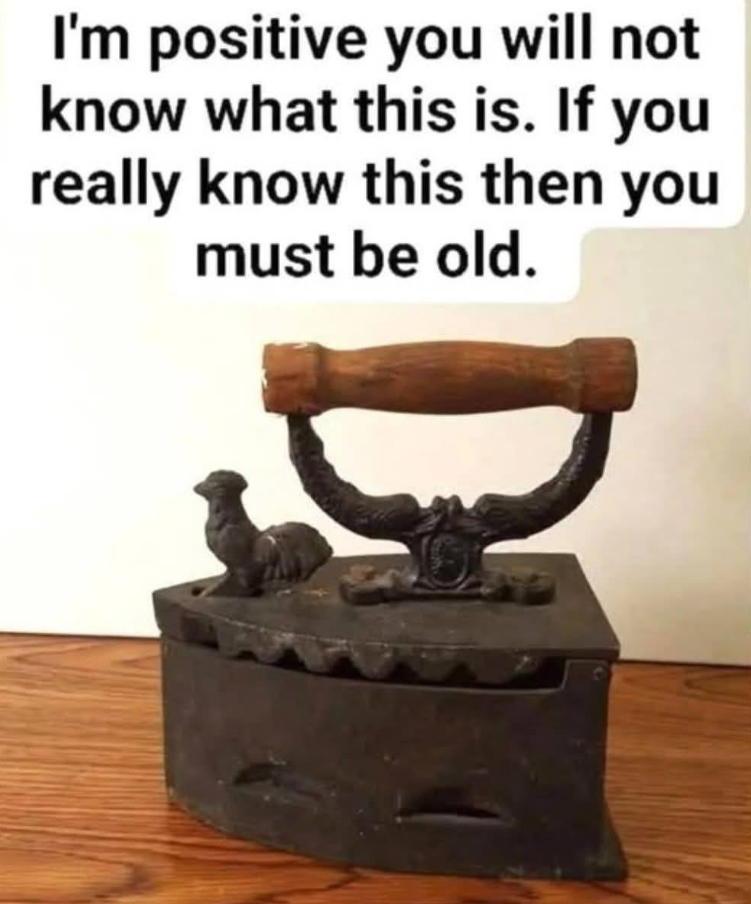
Often shaped like a rooster, bird, or floral motif, the latch wasn’t just pretty—it was functional. The lid could be opened to add fresh coals or remove ash without setting the whole iron down.
🐓 Fun fact: The rooster—a symbol of vigilance and domestic order—was a popular motif, reflecting the iron’s role in maintaining a tidy household.
3. Wooden Handle
Made from beech, oak, or other dense wood, the handle stayed cool because wood is a poor conductor of heat. This allowed users to iron for extended periods without burning their hands.
4. Air Vents & Scalloped Edges
Slots along the sides and decorative cutouts weren’t just ornamental—they allowed oxygen to flow, keeping the charcoal glowing steadily rather than smoldering out.
5. Heavy, Smooth Soleplate
The bottom was thick, flat, and polished to distribute heat evenly and glide smoothly over fabric—just like modern irons.
🔥 How It Was Used: A Delicate Dance with Fire
Heat the coals: Charcoal was lit in a small brazier or stove until glowing.
Fill the iron: Using tongs, hot coals were placed into the iron’s cavity.
Latch the lid: The hinged top was secured to contain heat and ash.
Test the temperature: A scrap of cloth was pressed to the soleplate—too hot? Wait. Too cool? Add coals.
Iron with care: The user worked quickly but gently, recharging the iron as needed through the day.
⚠️ Caution was key: Too much charcoal could scorch fabric; too little left wrinkles. And ash had to be emptied regularly to prevent smoke or spillage.
⚙️ Why It Was Revolutionary
Before charcoal box irons, most people used “sad irons”—solid blocks of iron heated on a stove. These had to be swapped out every 5–10 minutes as they cooled, requiring multiple irons and constant trips to the hearth.
The charcoal box iron solved this by carrying its own heat source, allowing for longer, uninterrupted ironing sessions—a huge time-saver in an era when laundry was a full-day chore.
🕯️ A Glimpse into Daily Life
Using a charcoal iron wasn’t just about crisp linens—it was a ritual of skill and patience.
Laundresses might carry an iron in one hand and a small coal bag in the other.
Families often had two or three irons—one in use, one cooling, one being recharged.
Safety was vital: Sparks, ash, and intense heat meant ironing was never left to children.
Final Thought: Ingenuity in Every Detail
The charcoal box iron is more than an antique—it’s a testament to human creativity in the face of everyday challenges. Long before “smart” appliances, people engineered elegant, functional solutions using fire, iron, and wood.
So the next time you press a shirt with the flick of a switch, take a moment to appreciate the glowing coals, wooden handles, and rooster-latched irons that paved the way.
🔥 Some of the best technology isn’t high-tech—it’s simply wise.
Have you seen a charcoal iron in a museum or antique shop? Share your experience below! And if you found this glimpse into history fascinating, pass it on. Sometimes, the quietest tools tell the loudest stories. 💛✨
For Complete Cooking STEPS Please Head On Over To Next Page Or Open button (>) and don’t forget to SHARE with your Facebook friends.