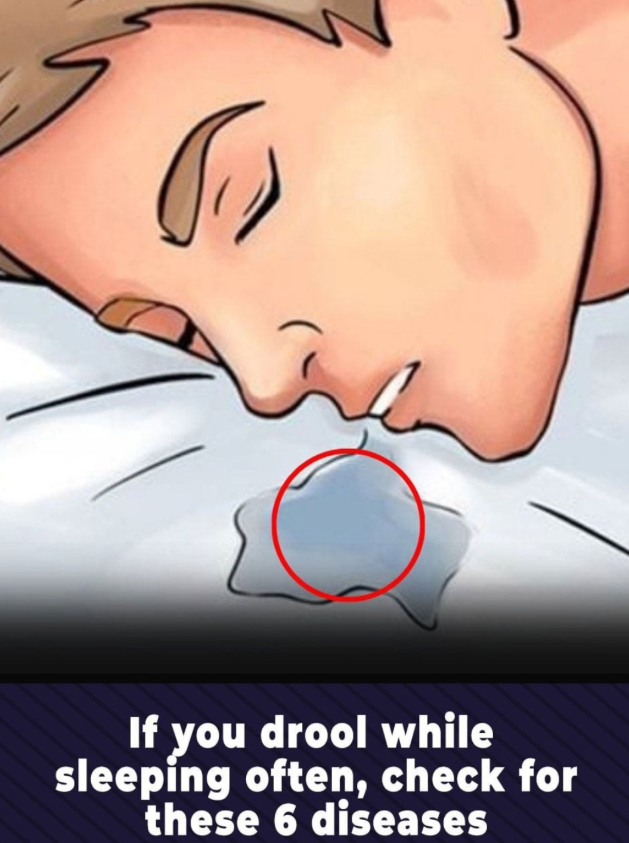
🌟 Is Drooling Normal?
Yes — occasional drooling during sleep is completely normal.
It often happens when:
You’re deeply relaxed or exhausted
You sleep on your side or stomach — gravity pulls saliva out
You’re in REM sleep, when muscle tone is low
But if your pillow is soaked every night, or you’re waking up with a sticky face or chapped lips, it’s worth asking:
Why is this happening — and should I be concerned?
🔍 6 Possible Causes of Excessive Nighttime Drooling
1. Sleeping Position
Side or stomach sleepers are more prone to drooling
Gravity pulls saliva out of the mouth when your face is turned down
Solution: Try sleeping on your back — use a pillow to support proper alignment
✅ Harmless — but can be managed with position changes.
2. Sleep Apnea (Obstructive)
One of the most important — and often overlooked — causes.
In sleep apnea, the airway becomes blocked during sleep
You breathe through your mouth, disrupting the normal swallow reflex
Saliva pools and leaks out
Often accompanied by snoring, gasping, or daytime fatigue
✅ Red flags:
Loud snoring
Waking up choking
Morning headaches
Extreme tiredness during the day
👉 If you suspect sleep apnea — see a doctor. It’s treatable and can prevent heart issues, stroke, and more.
3. Gastroesophageal Reflux Disease (GERD)
Acid reflux can stimulate excess saliva production (your body’s natural antacid)
Lying down makes it easier for saliva to escape
You may also experience heartburn, regurgitation, or a sour taste in the morning
✅ Fix: Elevate your head while sleeping, avoid late meals, and manage reflux with diet or medication.
4. Nasal or Sinus Issues
Allergies, colds, or a deviated septum can block your nose
You breathe through your mouth, which dries the throat and disrupts swallowing
Saliva builds up and may leak out during sleep
✅ Clue: You also snore or wake up with a dry mouth.
5. Neurological Conditions
In some cases, drooling can be a sign of nerve or muscle dysfunction.
Parkinson’s disease
Weakens swallowing reflex and facial muscles
Stroke
Can impair control over mouth and throat muscles
ALS (Lou Gehrig’s disease)
Progressive muscle weakness includes swallowing
Cerebral palsy
Common in children, due to motor control issues
✅ When to worry: If drooling is new and paired with:
Slurred speech
Muscle weakness
Difficulty swallowing
Facial drooping
👉 Seek medical evaluation.
6. Medications or Dental Issues
Some drugs and oral conditions can increase saliva or interfere with mouth closure.
Medications
Antipsychotics, seizure drugs, Alzheimer’s meds, and anti-nausea drugs can overstimulate salivary glands
Dental problems
Misaligned bite, gum disease, or ill-fitting dentures can make it hard to keep your mouth closed
✅ Fix: Talk to your dentist or doctor — adjustments may help.
🚩 When to See a Doctor
Drooling is usually harmless — but persistent or sudden changes deserve attention.
See a healthcare provider if you have:
✅ Drooling
every night
and soaking your pillow
Could signal sleep apnea or reflux
✅
Difficulty swallowing
or choking while eating
Possible neurological issue
✅
Muscle weakness or slurred speech
Red flag for stroke or neuro condition
✅
Daytime fatigue or loud snoring
Classic signs of sleep apnea
✅
Sudden onset
of drooling
Especially if you didn’t used to drool
Don’t wait. Early diagnosis can prevent complications.
🛡️ How to Reduce Nighttime Drooling
✅
Sleep on your back
Reduces saliva leakage
✅
Use a wedge pillow
Helps with reflux and breathing
✅
Treat allergies or sinus issues
Promotes nasal breathing
✅
Manage GERD
Reduce acid and excess saliva
✅
See a dentist
Fix dental issues or ill-fitting appliances
💬 Final Thoughts: Your Body Speaks — Are You Listening?
We ignore small signs.
We blame it on the pillow.
We say, “It’s just drool.”
But sometimes, the difference between “no big deal” and “early warning”…
Isn’t in the mess.
It’s in the pattern.
So if you’re drooling more than usual…
If it’s affecting your sleep or confidence…
If you’re tired all the time…
Don’t brush it off.
Pay attention.
Ask questions.
See a doctor if needed.
Because sometimes, the way you sleep — and what happens while you sleep — can tell you more about your health than you think.
And once you start listening?
You might just catch something before it becomes serious.